
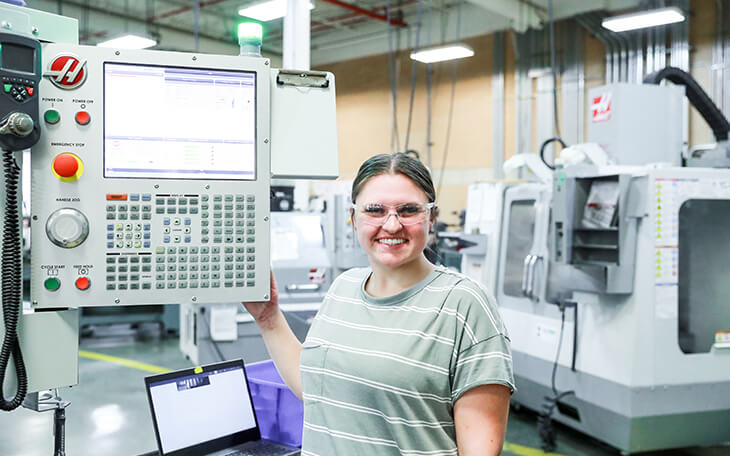
In a world where accuracy, reliability, and durability define industrial success, precision CNC components have become the backbone of modern engineering. From aerospace and medical devices to automotive systems and industrial machinery, manufacturers increasingly rely on CNC technology to produce components that maintain exceptional performance even under demanding conditions. High-quality CNC parts ensure not only precise functionality but also long-term durability, making them essential for any application requiring consistent, dependable results.
What Makes CNC Components “Precision” Components?
Precision CNC components are parts produced through computer-controlled machining, where every cut, contour, and surface is shaped based on digital programming. The high level of accuracy—from microns to sub-millimeter tolerances—ensures that each component fits perfectly within its intended design, even in complex mechanical assemblies.
Key elements that define precision CNC manufacturing include:
- Tight tolerances and consistent measurements
- Multi-axis machining for complex geometries
- Advanced CAD/CAM programming for exact tool paths
- Reduced human error and enhanced repeatability
- Dimensional accuracy verified through modern metrology equipment
These factors contribute to producing parts engineered for long-term reliability and superior performance.
Why Long-Term Performance Matters
Industrial sectors rely on components that can withstand pressure, vibration, heat, corrosion, and continuous use. The long-term performance of CNC components ensures:
- Reduced downtime for equipment and systems
- Lower maintenance costs over the product’s lifespan
- Fewer part replacements, maximizing efficiency
- Improved safety and reliability in critical applications
- Consistent performance even under harsh conditions
Poorly manufactured parts lead to system failures, production delays, and increased operating costs—making precision CNC components the smarter choice for long-lasting value.
Materials Used in Long-Life CNC Components
To maximize performance and lifespan, CNC components are often crafted from high-end metals and engineered materials, such as:
- Stainless steel for corrosion resistance
- Aluminum for lightweight strength and thermal stability
- Titanium for high strength-to-weight ratio
- Brass and copper for conductivity and durability
- Hardened alloy steels for wear resistance
- Inconel and superalloys for extreme heat environments
- Industrial plastics such as Delrin, PEEK, and UHMW for specialized applications
Material selection plays a major role in a component’s longevity, ensuring optimal performance in even the most demanding industries.
Industries That Depend on Long-Lasting CNC Components
Aerospace & Defense
Highly stressed components—such as turbine parts, brackets, housings, and structural elements—must withstand extreme temperatures, pressure, and vibration. CNC machining ensures these parts meet strict aerospace standards.
Automotive & High-Performance Engineering
CNC components used in engines, transmissions, braking systems, and suspensions must offer long-term reliability to ensure safe and smooth operation.
Medical Device Manufacturing
Implants, surgical tools, and equipment housings require flawless accuracy and biocompatible materials to ensure long-term patient safety and device durability.
Oil, Gas & Energy
Valves, pumps, flanges, and drilling components operate in harsh environments, requiring heat resistance, corrosion resistance, and long-lasting structural integrity.
Industrial Machinery & Automation
Motors, gear systems, fixtures, and robotic components all rely on precision CNC parts to maintain consistent performance and minimize machine downtime.
Advanced CNC Technologies That Enhance Longevity
5-Axis CNC Machining
Enables complex parts to be produced in a single pass, reducing weak points and improving overall structural integrity.
High-Speed CNC Milling and Turning
Reduces stress on materials while improving precision and finish quality.
CNC Grinding and Finishing
Achieves mirror-like finishes, reducing friction and extending component lifespan.
CMM and Automated Inspection
Coordinate Measuring Machines and laser scanners ensure each part meets exact specifications.
Advanced Surface Treatments
Coatings such as hard anodizing, nitriding, and PVD coating help components resist wear, corrosion, and environmental damage.
How Precision CNC Components Are Engineered for Long-Term Performance
1. Optimal Design for Strength and Durability
Engineers use advanced modeling software to optimize part geometry, reducing stress points and enhancing load distribution.
2. Controlled Machining Environments
Temperature-controlled machines and stable setups prevent distortion and improve component lifespan.
3. Superior Surface Finishing
A smooth surface reduces friction, heat, and wear, extending lifespan significantly.
4. Quality Materials and Testing
Every material is carefully selected, inspected, and certified before machining.
5. Rigorous Quality Control
Each component undergoes dimensional inspection, hardness testing, stress evaluation, and sometimes fatigue testing to ensure durability.
Benefits of Choosing Precision CNC Components
- Exceptional reliability over time
- Higher performance under extreme conditions
- Lower operational costs due to reduced failures
- Perfect compatibility within mechanical assemblies
- Consistent production quality
- Fewer replacements and longer service intervals
Precision CNC components contribute directly to improving product quality, system reliability, and long-term ROI.
Conclusion
Precision CNC components engineered for long-term performance are essential for industries where accuracy, strength, and durability are critical. By combining advanced machining technology, high-quality materials, and rigorous engineering standards, CNC manufacturing ensures that every component performs reliably throughout its lifespan. Whether for aerospace, automotive, medical, or industrial applications, CNC precision remains the gold standard for creating parts built to last.