
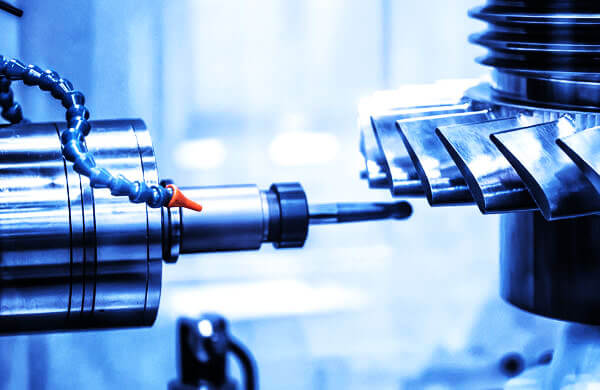
As global industries continue to evolve, the demand for precise, reliable, and efficient manufacturing processes has never been higher. Innovative CNC fabrication services have emerged as a cornerstone of modern industrial projects, enabling businesses to transform raw materials into high-performance components with exceptional accuracy. From aerospace and automotive production to energy, medical, and industrial machinery sectors, CNC technology delivers results that meet rigorous engineering standards and accelerated production timelines.
What Are CNC Fabrication Services?
CNC (Computer Numerical Control) fabrication uses digitally programmed machinery to cut, shape, mill, drill, and form materials into finished components. Unlike manual fabrication, CNC machining operates with precision automation, ensuring repeatability, consistency, and high-level performance across different production runs.
Modern CNC fabrication integrates:
- Multi-axis machining (3-axis, 4-axis, 5-axis)
- High-speed milling and turning
- CNC laser cutting and plasma cutting
- CNC routing and engraving
- Advanced CAD/CAM programming
- Automated material handling systems
- Digital inspection and quality control tools
These innovations allow manufacturers to produce complex, tight-tolerance parts that traditional fabrication methods struggle to achieve.
Why Innovative CNC Fabrication Matters for Today’s Industries
Industrial projects are becoming increasingly complex, requiring advanced materials, sophisticated designs, and minimal production errors. Innovative CNC fabrication addresses these challenges by offering:
1. Precision at Every Stage
CNC machines operate with micrometer-level accuracy, allowing manufacturers to create intricate designs and geometries that must meet strict specification requirements.
2. Faster Production Times
Automated fabrication processes reduce manual labor, setup times, and part handling. This results in faster output without compromising quality.
3. Consistency Across Large Production Batches
Digital programming ensures that every component produced—whether the first or ten-thousandth—is identical.
4. Enhanced Material Utilization
CNC machines optimize cutting paths and reduce material waste, lowering costs and improving sustainability for large-scale industrial projects.
5. Versatility for Different Industries
CNC fabrication supports an extensive range of materials, including:
- Stainless steel
- Aluminum
- Copper and brass
- Titanium
- Hard plastics
- Carbon fiber composites
- Engineering-grade polymers
This allows the technology to be used across many demanding sectors.
Applications of CNC Fabrication in Modern Industrial Projects
Aerospace Engineering
Precise, lightweight, and durable components—such as engine housings, brackets, and structural frames—depend heavily on CNC technology due to strict safety and performance regulations.
Automotive Production
CNC fabrication supports vehicle prototyping, engine component manufacturing, mold creation, transmission parts, and custom modifications.
Energy & Power Systems
Power plants, renewable energy systems, and oil & gas industries rely on CNC-made components such as turbines, valves, fittings, and structural parts.
Medical & Healthcare Manufacturing
CNC fabrication enables the creation of surgical instruments, implant components, prosthetic parts, and intricate device housings with exceptional accuracy.
Industrial Machinery & Equipment
CNC machining produces gears, shafts, rollers, custom fixturing, and machine components for factories and production lines.
Innovative CNC Technologies Driving Industrial Manufacturing
5-Axis CNC Machining
This technology enables simultaneous movement along five axes, offering unmatched precision and the ability to machine complex shapes in a single setup.
CNC Laser Cutting
Laser systems deliver extremely fine, clean cuts on a variety of materials—ideal for intricate designs and thin metals.
CNC Waterjet Cutting
Waterjet machines allow for heat-free cutting of materials, preserving structural integrity for metals, stone, composites, and plastics.
CNC Automation & Robotics
Robotic arms handle material loading, unloading, and post-processing, improving consistency and reducing downtime.
Smart Sensors & Real-Time Monitoring
Modern CNC machines incorporate intelligent systems that monitor tool wear, machine temperature, vibrations, and efficiency to ensure flawless output.
Benefits of Choosing Professional CNC Fabrication Services
Partnering with experts in CNC fabrication provides significant advantages:
- Access to state-of-the-art machines and fabrication equipment
- Support from highly trained engineers and machinists
- Reliable and documented quality assurance processes
- Faster turnaround times for prototypes and large production runs
- Cost-effective solutions tailored to project scope
- Ability to work with complex, challenging, or custom designs
Professional CNC services ensure that every industrial project meets performance standards and is delivered with precision.
Future Trends in CNC Fabrication Technology
As the manufacturing world continues to transition into Industry 4.0, CNC fabrication is embracing several powerful trends:
- AI-enhanced machining optimization
- Automation-driven production lines
- Advanced materials and composites
- Hybrid machines combining 3D printing and CNC milling
- Digital twins for real-time simulation and accuracy predictions
These innovations will shape the next generation of industrial manufacturing, making CNC services more efficient, intelligent, and adaptable.
Conclusion
Innovative CNC fabrication services are essential to the success of modern industrial projects. By integrating high-speed automation, multi-axis machining, advanced cutting technologies, and intelligent monitoring systems, CNC fabrication delivers unmatched precision and performance. Whether producing a single prototype or thousands of industrial components, CNC technology ensures consistent results that meet the demands of today’s engineering challenges.