
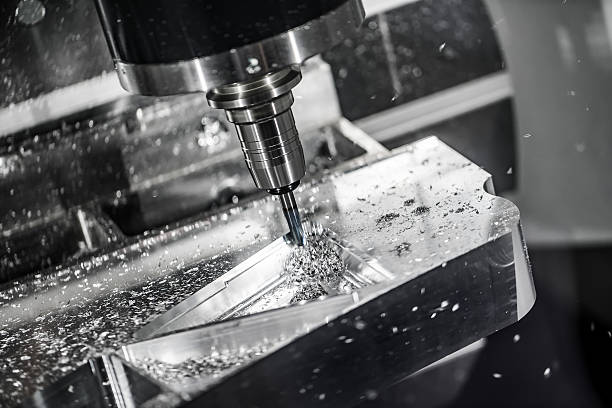
In today’s competitive industrial landscape, achieving precision, speed, and consistency is essential for manufacturers across all sectors. Advanced CNC machining solutions have become the backbone of high-precision manufacturing, enabling companies to produce complex parts with unmatched accuracy and efficiency. From aerospace and automotive to medical devices and electronics, CNC technology continues to redefine what is possible in modern production environments.
What Is Advanced CNC Machining?
Advanced CNC (Computer Numerical Control) machining refers to the use of sophisticated automated machines that operate through programmed instructions to shape raw materials into finished components. Unlike manual machining, CNC machines deliver superior accuracy, require minimal labor intervention, and maintain tight tolerances across large production batches.
Modern CNC systems incorporate features such as:
- Multi-axis machining (3-axis, 4-axis, 5-axis, and beyond)
- High-speed spindles and precision tooling
- Automated tool changers
- Real-time monitoring and adaptive machining
- CAD/CAM integration
- Robotics and automation for part loading/unloading
These advancements allow manufacturers to produce intricate geometries and high-performance parts at scale while maintaining consistent quality.
Why High-Precision Manufacturing Matters
Precision is crucial across many industries. Even a small deviation in measurements can result in part failure, machine malfunction, or product inefficiency. High-precision manufacturing ensures:
- Improved performance and reliability of components
- Longer product lifespan
- Better fit and function within assemblies
- Reduced waste and lower production costs
- Faster time-to-market
- Compliance with international manufacturing standards
Advanced CNC machining delivers the accuracy necessary to meet these stringent requirements.
Key Advantages of Advanced CNC Machining Solutions
1. Unmatched Accuracy and Repeatability
CNC machines operate based on digital instructions, allowing for incredibly tight tolerances—often within microns. Once a program is created, the machine can repeat the same process thousands of times without deviation, ensuring perfect consistency.
2. Increased Productivity and Efficiency
High spindle speeds, faster cutting tools, and automation allow CNC machines to operate at exceptional speeds. Multi-axis machining reduces setup times and allows complex parts to be completed in fewer operations.
3. Superior Quality Surface Finishes
CNC machining produces smooth surfaces, clean edges, and excellent dimensional integrity. With the right tooling and machine settings, manufacturers can achieve mirror-like finishes that often require little or no post-processing.
4. Versatility Across Materials
Advanced CNC systems can handle a wide range of materials, such as:
- Aluminum
- Stainless steel
- Titanium
- Brass
- Copper
- Plastics
- Composites
This flexibility makes CNC machining ideal for industries with diverse material requirements.
5. Reduced Human Error
Automation minimizes the need for manual intervention, dramatically reducing the risk of measurement mistakes, tool mishandling, or other human-related errors.
Applications of High-Precision CNC Machining
Aerospace & Defense
Aircraft components require flawless precision due to high safety standards. CNC machining creates lightweight, durable, and complex parts for turbines, airframes, and engine systems.
Automotive Manufacturing
From prototyping to full-scale production, CNC machining is essential for creating engine components, transmission parts, brackets, and custom automotive accessories.
Medical and Dental Devices
The medical industry relies on CNC for surgical tools, implants, prosthetics, and device housings, all requiring extreme accuracy and biocompatible materials.
Electronics and Semiconductor
CNC machining produces precision housings, connectors, heat sinks, and small intricate parts needed for advanced consumer and industrial electronics.
Industrial Machinery
CNC technology supports the production of gears, shafts, mechanical components, and custom machine parts used in factories and manufacturing plants.
Advanced CNC Technologies Transforming Manufacturing
5-Axis CNC Machining
5-axis systems allow cutting tools to move along five directions simultaneously, enabling the production of highly complex shapes in fewer setups. This increases accuracy and reduces machining time.
Hybrid CNC Machines (CNC + Additive)
These machines combine subtractive CNC machining with additive manufacturing (3D printing), giving manufacturers even greater flexibility in prototyping and production.
Automation and Robotics
Robotic arms now handle part loading, tool changes, and inspection, creating efficient and fully automated production lines.
Real-Time CNC Monitoring
Sensors and software analyze machine performance, tool wear, and cutting conditions, allowing for predictive maintenance and minimal downtime.
Why Choose Professional CNC Machining Services?
Partnering with an experienced CNC machining provider ensures access to:
- State-of-the-art machines and tooling
- Skilled engineers and machinists
- Reliable quality assurance and inspection processes
- Faster production and delivery times
- Cost-effective solutions tailored to project needs
Professional CNC machining services help businesses turn concepts into high-performance components while maintaining top-tier precision throughout the manufacturing cycle.
Conclusion
Advanced CNC machining solutions are revolutionizing the manufacturing world by enabling high-precision, efficient, and scalable production of parts across all industries. Whether you need prototypes, small-batch components, or full-scale manufacturing, CNC technology delivers the accuracy and reliability required to stay competitive in a rapidly evolving industrial landscape.
If you want, I can create another CNC article, generate titles, or write landing page content for a CNC business.